- Naturally strong at reading the fight from safer angles and supporting the team from behind.
- Adds value by stabilizing the fight and punishing enemy pressure.
- Makes decisions through tracking the whole team shape and the next objective.
TYPE PROFILE
Rapid Response Medic
Support
BTARRapid Response MedicRarity★★★
Recommended role: Support
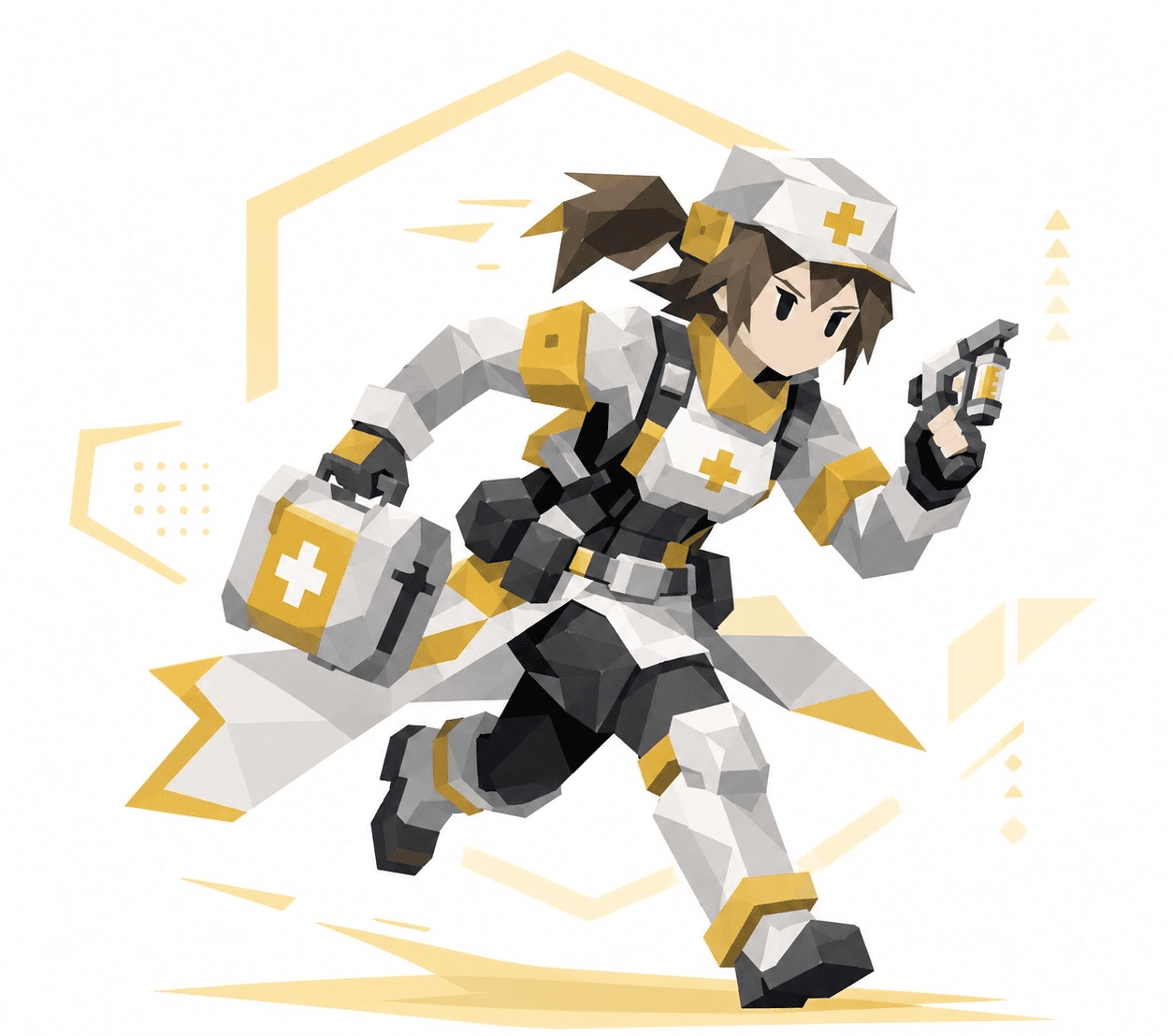
A Support tendency built around reading the fight from safer angles and supporting the team from behind, stabilizing the fight and punishing enemy pressure, tracking the whole team shape and the next objective, and reacting quickly to what allies and enemies do.
Compatible type
FGARAssault Vanguard tends to bring out your strengths.
Find your partner hero
Choose a role and answer a few playstyle questions to narrow down heroes that may fit you.
- Can lose value when forced into the opposite tempo.
- May overuse the habit that normally feels most comfortable.
- Needs a clear reset plan when the first idea fails.
If your result is BTAR, you focus on sending support wherever the current situation demands it. Rather than committing to a prediction, you react to a teammate in danger, an ally beginning an engage, or the exact moment the enemy commits. If you depend too heavily on reacting after something happens, you can spend the entire fight one step behind.
Advice
Keep the core of Rapid Response Medic, but check whether the fight needs speed, patience, a wider view, or a smaller duel before committing.
Assault Vanguard (FGAR) gives Rapid Response Medic a clear moment for fast support. When FGAR recognizes an opening and dives, BTAR can follow the movement and deliver help exactly where it is needed.
The clarity of FGAR's engagement helps BTAR decide when to heal, protect, or spend a rescue tool. FGAR benefits from that immediate response by gaining a better chance to finish the target and a safer route out when the dive becomes dangerous.
This pairing combines a fast response with explosive action. For example, when D.Va uses Boosters and Micro Missiles to finish a target, Kiriko can reach her with Wall Climb or Swift Step and add healing or damage to make the engagement succeed.